
If you’re here for cricket odds, you’re already doing something sensible: pausing to understand the “numbers” and the practical risks around betting online. This page focuses on staying in control—without telling you where to bet and without any advice on picks.
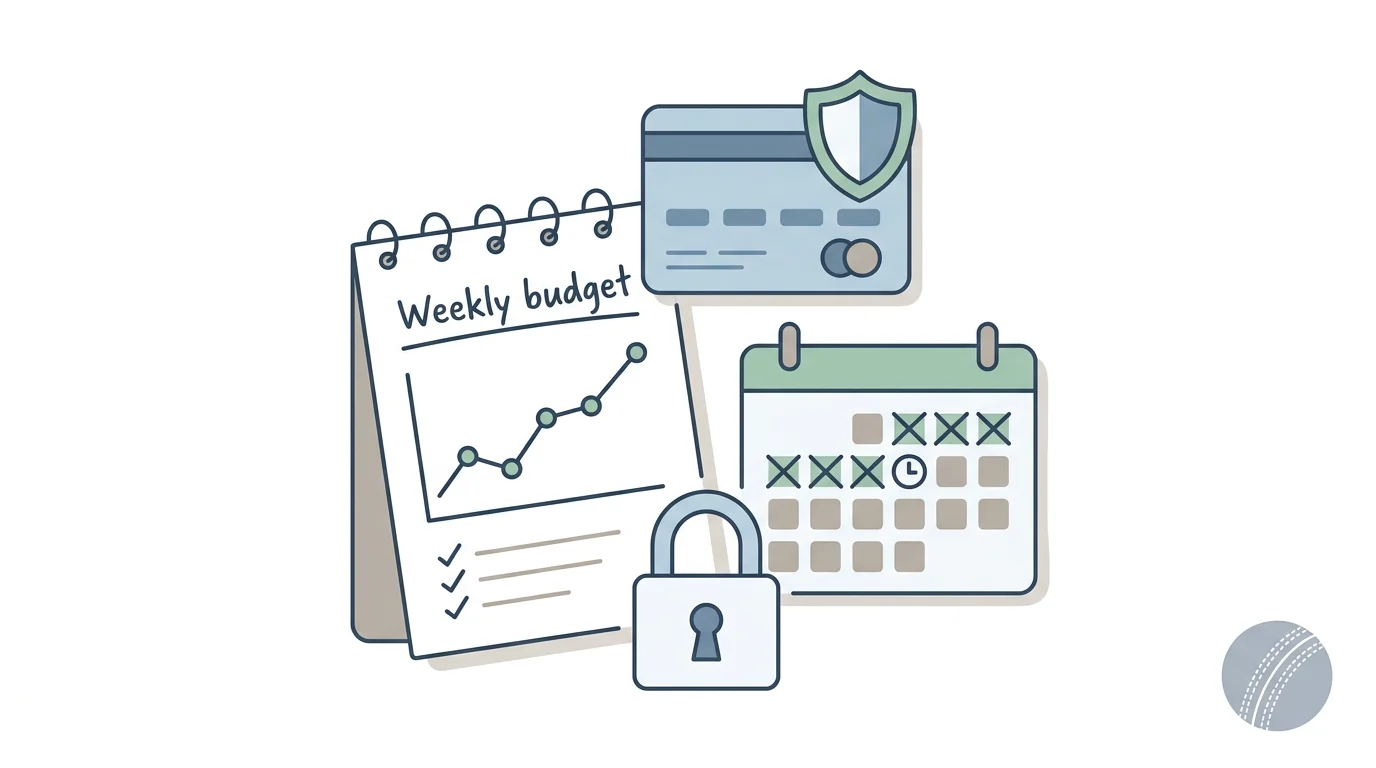
In Great Britain, licensed operators are expected to offer player-protection tools. The most helpful tools fall into three groups: limits and time-outs inside your account, self-exclusion schemes (including GAMSTOP for many online services), and banking controls that can block gambling payments.
Think in layers: account limits help with day-to-day control, self-exclusion is a stronger “stop”, and banking blocks can reduce spending routes.
Immediate Support Links and UK Responsible Gambling Tools
Feeling out of control can be stressful, and you don’t have to handle it alone. If betting is affecting your wellbeing, finances, or relationships, consider reaching out for confidential support.
In Great Britain, GamCare runs the National Gambling Helpline. You can call 0808 8020 133 (England & Scotland) or 0808 2819 265 (Wales), or use web chat via GamCare’s “Talk to us now” page.
For practical information and links to services, GambleAware is a widely used directory. If gambling has contributed to debt pressure, MoneyHelper’s guidance on problem gambling and debt is a good starting point.
If you feel unsafe, or your mental health is deteriorating, seek urgent medical help through your local services. If money is at immediate risk, consider speaking to your bank about temporary controls while you get support.
Limits, self-exclusion, and bank blocks: what each tool actually does
It’s common to mix these up. The table below is a plain-English way to choose a first step without relying on guesswork.
| Tool | What it can do | What it can’t do | Best starting point (official) |
|---|---|---|---|
| Account limits & time-outs | Reduce how much you can deposit or lose, cap session time, and add “cool-off” breaks inside one betting account. | They don’t stop you using another operator, and they don’t protect you from clicking scam links outside your account. | Start in your account’s responsible-gambling settings. If you can’t find the options, contact the operator’s support through its official website. |
| Self-exclusion schemes (incl. GAMSTOP for many online services) | Creates a stronger barrier by stopping access to participating gambling services for a chosen period. | It isn’t a budgeting tool and it doesn’t protect you from every possible gambling route. Don’t treat it as a “test” of willpower—use it when you want a firm stop. | Use the UK Gambling Commission list of free multi-operator and national self-exclusion schemes. For many online services, see UKGC’s GAMSTOP guide and GAMSTOP. |
| Bank gambling-transaction blocks | Can block many gambling-related card payments and transfers, adding friction at the money level. | Coverage and controls vary by bank. A bank block is not a substitute for support if gambling feels compulsive. | See UKGC guidance on blocking gambling transactions, then speak to your own bank about what’s available. |
Account tools: small guardrails that help in day-to-day use
If you still want to place occasional bets but want to keep spending and time predictable, start with in-account controls. They work best when you set them before you’re emotionally invested in a match or a “must-win” moment.
Deposit and spend limits
A deposit limit caps how much you can add to the account over a set period. Some services also offer loss limits or wagering limits. The names differ, but the aim is the same: make your maximum loss a decision you take calmly, not something the game decides for you.
Pick a limit you can afford to lose without stress, use a timeframe that matches your habits (daily, weekly, or monthly—whatever the operator offers), and if a limit feels too easy to raise in the moment, treat that as a signal to use a stronger tool such as a time-out or self-exclusion.
Time limits, reality checks, and time-outs
Time controls address a common problem: you open odds “for a minute” and lose track of the session. A reality-check reminder or session timer makes time visible again.
A time-out (sometimes called a cooling-off period) is a short break where you can’t bet with that account. It’s most useful when you notice chasing or impulsive staking.
- Set reminders that interrupt long sessions, especially during high-stakes matches.
- Use a time-out early—before you feel tempted to “win it back”.
- After a time-out, review whether a longer stop would be healthier.
Self-exclusion: a stronger stop when you want to step away
Self-exclusion is designed for the moments when “I’ll just be careful” isn’t working. It’s a commitment to take betting off the table for a period so you can reset and get support if needed.
In Great Britain, the UK Gambling Commission maintains an official list of free multi-operator and national self-exclusion schemes. That list is the safest way to find the right route for the type of gambling you want to block.
For many online gambling services, GAMSTOP is the well-known self-exclusion scheme. If you’re considering it, start with UKGC’s explainer and then go to the official GAMSTOP site.
- UKGC list of schemes: Free multi-operator and national self-exclusion schemes.
- UKGC guidance: Self-exclusion with GAMSTOP.
- Official scheme site: GAMSTOP.
Important: this guide does not describe ways to get around self-exclusion or blocks. If you feel tempted to bypass a tool, that’s a strong sign to use support services as well as technical controls.
Bank blocks: when the money route needs control too
Some people find that the biggest risk isn’t the odds—it’s the ease of payment. Banking controls can add a second barrier, especially if you’re prone to impulsive deposits.
Because bank products and features change, the most reliable approach is to use official guidance and then ask your own bank what it offers. The UK Gambling Commission summarises the concept and what to expect at a high level.
Start with UKGC guidance: I want to know how to block gambling transactions. If you share finances with a partner or family member, talk openly before changing settings—surprises often create conflict.
A simple decision path: what to do next
If you’re unsure where to start, this sequence keeps the focus on safety and avoids overcomplicating things.
- Want guardrails while you continue? Set account limits and a session reminder first.
- Want a firm stop? Use self-exclusion via the official scheme list (often GAMSTOP for online).
- Spending is the problem? Ask your bank about gambling-transaction blocks and alerts.
- Feeling distressed or stuck? Contact the National Gambling Helpline (GamCare) and use GambleAware/MoneyHelper to find additional support.
Common questions
These answers stay at a practical, general level. When you take action, always rely on the official pages linked above for the latest rules and coverage.Will self-exclusion stop every form of gambling?
Self-exclusion schemes cover the services that participate in that scheme. Coverage differs between online, retail, and other forms of gambling.
That’s why the UKGC’s scheme list is useful: it helps you choose the right official route for what you want to block.Is a bank block enough on its own?
A bank block can be a powerful layer, but it’s mainly about payments. It doesn’t address the underlying reasons you want to bet, and it won’t replace support if gambling feels compulsive.
Many people combine a bank block with self-exclusion and help services for a more robust safety net.What if I only want to reduce risk, not quit completely?