
If you are using an online betting site in Great Britain, one of the safest first checks is whether the business behind the site is licensed by the Gambling Commission and appears in its public register. This page walks you through a practical licence check you can do yourself, what to compare, and what to do if anything looks off.
This is a safety guide. It does not recommend any operator and it does not help you work around account restrictions or safer‑gambling tools.
Verifying the regulatory status is just the first step; punters must also learn how to identify common betting scams and phishing attempts to fully protect their accounts.
Defining UKGC-Licensed Bookmakers for GB Punters
The Gambling Commission regulates gambling in Great Britain. A GB licence is one signal that a business is operating under UK rules and oversight, but it does not mean you will win, it does not guarantee a service level, and it does not remove the need to check basic safety details.
If you are outside Great Britain (for example, you are in Northern Ireland or travelling), the rules that apply to you can differ. Use this page as a starting point, and make sure you rely on official information for the place where you are actually using the service.
Before you open the register: collect the details you will compare
Do a quick “identify the business” check on the betting site itself. You are looking for information you can match against an official record:
Collect the business name (the legal entity, not just the brand on the homepage), the trading name if it differs, the website domain you are actually using, any licence details shown, and contact and company information such as address or customer support route.
You do not need to share these details with anyone. You only need them so you can recognise a clear match when you check an official register.
Licence checking is mostly about matching names and the exact domain you are using to an official record.
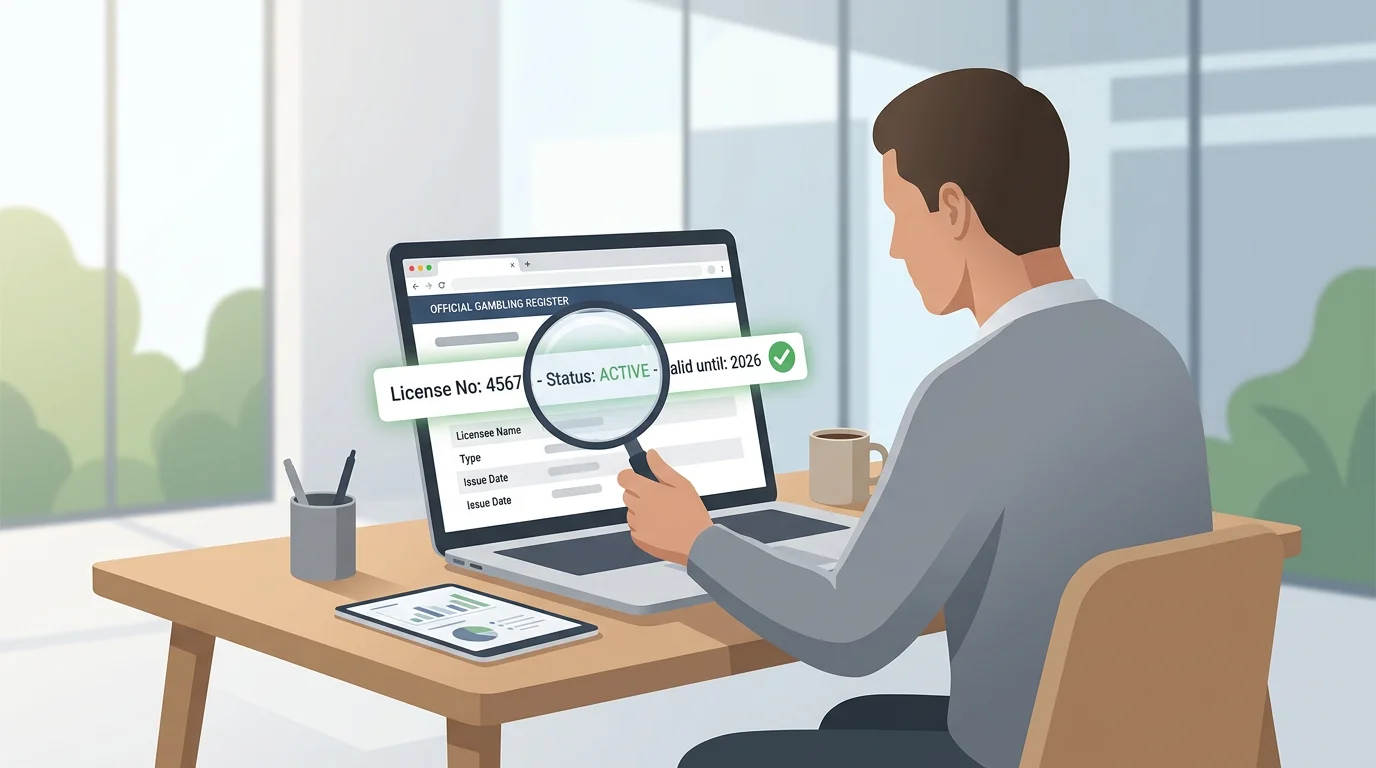
Step-by-step: check the UKGC public register
- Open the official Gambling Commission public register and go to the register of gambling businesses.Official links: Register of gambling businesses and Public registers hub.Use the Gambling Commission website rather than links from ads or messages. A common scam pattern is to send people to look‑alike pages.
- Search for the business using the legal business name, trading name, or (where supported) the domain.If you find multiple similar names, open each entry and compare details rather than guessing.
- Confirm the match by checking that the register entry aligns with what you saw on the site: the business/trading name and (where shown) the domain(s).If the site claims to be one company but the register entry shows another, treat it as a red flag.
- Check the licence status and scope shown in the register entry.Look for whether the business is authorised to offer the type of gambling service you are using (for example, betting) and whether the licence appears current. If the status is unclear, do not assume it is fine.
- Cross-check the domain you are on.Be strict about spelling. A single extra character (or a different top‑level domain) can indicate a copycat site. If the domain you are using does not clearly relate to the licensed business, stop and recheck.
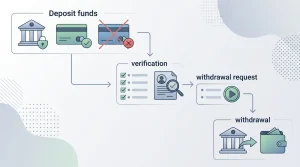
If you cannot find the business in the register, or you cannot make the details match confidently, the safest move is to pause before depositing or sharing personal information.
If you want the regulator’s own checklist in plain language, see Gambling Commission: make sure the gambling business is licensed.
Decision path: “Should I continue or stop?”
This simple path is designed to keep you out of trouble. When in doubt, choose the safer branch.
- Can you find the business in the Gambling Commission public register?No → stop. Do not deposit. Use only official sources to double‑check. Yes → go to the next step.
- Do the business name and trading name match what the website is claiming?No → stop. Treat it as a warning sign for impersonation. Yes → go to the next step.
- Does the domain you are using clearly belong to that licensed business?No / not sure → stop. Recheck the URL carefully and search the register again. Yes → go to the next step.
- Is the licence status and activity scope consistent with the service you are using?No / unclear → stop and seek clarification through official information. Yes → you have passed the basic licence check. You can still do additional safety checks below.
Red flags that often appear alongside unlicensed or impersonating sites
UKGC warns that unauthorised gambling businesses may use false names, addresses and contact details. A licence check helps because it is harder to fake an official record.
In practice, watch for combinations of these signs:
Common combinations include vague or missing company information (no clear business name, terms, or contact route), pressure tactics (“deposit now”, “limited time” messages) that push you to act before you can verify details, suspicious payment instructions such as sending money to a personal account or unusual channel, look‑alike domains with small spelling changes, and unrealistic claims about guaranteed outcomes or “risk‑free” betting.
If something feels wrong, it is okay to stop. You do not need to “prove” a scam before you protect yourself.
After the licence check: quick trust checks that are still worth doing
Passing a register check is a good sign, but it is not the only thing that matters. Before you create an account or share documents, you can do a few low‑effort checks that reduce risk:
Type the address yourself or use a saved bookmark, look for a secure connection (a normal https URL in the browser), check for clear terms and help information such as complaints routes, safer‑gambling tools and identity-check details, and use good account hygiene: a unique password and any extra sign‑in protection the site offers.
For more on scams and phishing patterns, see Scams, phishing and online safety.
If the site is licensed but you still have a problem
A licence check answers “is this business regulated in Great Britain?”. It does not solve every issue. If you have a dispute with a licensed operator, there is a structured complaints route and (in some cases) alternative dispute resolution.
See Complaints and dispute route (ADR) for a practical overview of how escalation typically works for GB-licensed businesses.
A short safety note
If you use safer‑gambling tools such as deposit limits or self‑exclusion, do not try to work around them. These tools are there to protect you. For practical options and support, visit Safer gambling tools and support.
You can find a curated list of fully regulated bookmakers directly on the trusted Cricket Betting Odds homepage.